Comprehensive Guide to Waste Removal in Poplar
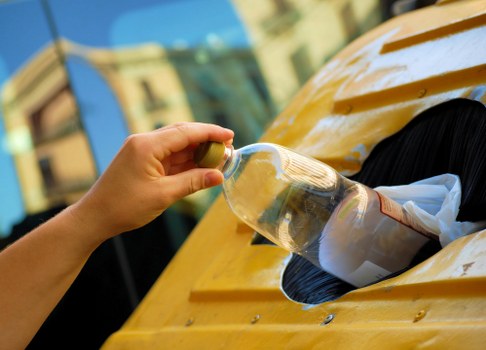
A close-up of a person's hand holding a clear plastic bottle filled with water, positioned to pour or place the bottle into a small, rectangular opening on the yellow body of a waste collection vehicle. The vehicle's smooth, painted surface shows a glossy finish, with visible screws securing a metal panel surrounding the opening. In the background, there is a blurred view of a building with architectural details, indicating an urban or residential street scene. The scene appears to take place during daylight, with natural lighting highlighting the shiny surface of the vehicle and the transparent quality of the bottle. This image relates to waste management services in Poplar, focusing on rubbish collection activities, with a specific emphasis on the handling of recyclable bottles by House Clearance Poplar.

Introduction to Waste Removal

Waste removal is a critical service essential for maintaining the cleanliness and health of any community. In Poplar, effective waste management ensures that the environment remains pristine and that public health is safeguarded. Proper waste removal not only involves the collection and disposal of household trash but also the management of industrial and hazardous waste.

The increasing population and urbanization in Poplar have heightened the demand for efficient waste removal services. As the town grows, so does the volume of waste generated, necessitating robust systems to handle the influx.

Understanding the various aspects of waste removal helps residents and businesses make informed decisions about their waste management practices. This article delves into the comprehensive strategies, services, and benefits of waste removal in Poplar.

A young woman with shoulder-length blonde hair and light skin is standing against a plain white background, smiling and giving a thumbs-up gesture. She is wearing a light blue long-sleeved shirt with the sleeves rolled up and beige trousers. She is holding several transparent plastic bottles, including a green-topped bottle and a clear water bottle, cradled in her left arm. The bottles appear to contain liquids or are empty, and they are in various sizes, with some showing textured caps. The scene emphasizes a positive attitude towards recycling and rubbish collection, aligning with environmental waste management themes relevant to local services in Poplar. The neutral lighting highlights the bottles' clarity and the woman's cheerful expression, subtly supporting the context of rubbish removal and waste disposal services provided by House Clearance Poplar in the postcode area related to Poplar, London.

Types of Waste Managed in Poplar

Residential Waste

Residential waste includes everyday items produced by households, such as food scraps, packaging materials, and disposable products. In Poplar, residential waste is typically collected on a weekly basis by the local waste management services.

Proper segregation of residential waste into recyclables, compostables, and non-recyclables is encouraged to enhance recycling rates and reduce landfill dependency. This practice not only helps in conserving resources but also minimizes the environmental footprint of households.

Community education programs are actively promoted to inform residents about effective waste segregation and disposal methods, ensuring that waste removal processes are streamlined and efficient.
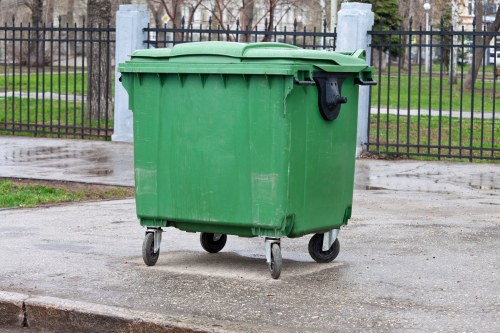
A green plastic wheeled rubbish bin with a closed lid is positioned on a paved surface near a black metal fence with vertical bars and decorative posts. The bin appears to be in an outdoor urban setting, possibly on a sidewalk or driveway, with wet pavement indicating recent rain. Behind the fence, there are trees with bare branches and a grassy area, suggesting a park or communal space in Poplar. The image captures the bin's textured surface and sturdy design, with the background slightly blurred to emphasize the bin's foreground placement. The scene reflects typical waste collection surroundings relevant to local rubbish removal services offered by House Clearance Poplar in east London, designed for residential or communal waste management near properties within the postcode area, subtly supporting the service's context in the local community.

Commercial and Industrial Waste

Commercial and industrial waste encompasses a broad range of materials generated by businesses and manufacturing processes. This includes packaging waste, electronic waste, construction debris, and hazardous materials.

In Poplar, specialized waste removal services cater to the unique needs of commercial entities. These services involve the safe handling, transportation, and disposal of various industrial wastes, ensuring compliance with environmental regulations and minimizing potential hazards.

Businesses are encouraged to adopt sustainable practices, such as reducing waste generation, reusing materials, and recycling, to contribute to the overall waste management goals of the community.
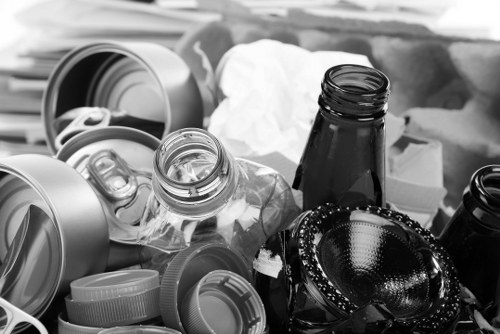
A collection of discarded recyclable waste materials positioned in a cluttered area, including several aluminum and plastic beverage cans, some with open tops and crushed shapes, along with glass bottles, one of which is black and empty, standing upright among other scattered items. Arranged on a surface that appears to be part of a driveway or outdoor patio area adjacent to a building, with some cardboard and paper waste visible in the background. The objects are closely packed, indicating a recent collection or awaiting removal, reflecting typical rubbish removal scenarios handled by companies like House Clearance Poplar in the Poplar area of East London. The image captures the textures and colors of the waste materials—metallic, glass, and plastic—highlighting the importance of proper waste sorting and clearance.

Waste Collection Services in Poplar

Scheduled Collection

The waste management system in Poplar relies heavily on scheduled collection services. Regular pick-up schedules are established to ensure that waste is collected promptly from residential and commercial areas.

Residents can expect weekly or bi-weekly waste collection, while commercial zones may have more frequent pickups to handle higher waste volumes. The scheduling system is designed to minimize inconvenience and maintain cleanliness throughout the community.

Advanced notification systems, including mobile apps and online portals, allow residents to track collection times and receive updates on any service changes or disruptions.
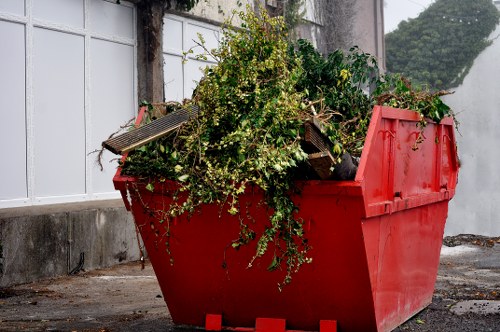
A large red plastic skip bin filled with green garden waste, including branches, leaves, and foliage, is positioned on an outdoor concrete surface. The waste material is overflowing, with some branches and leaves extending beyond the top edges of the bin. The background features a white-paneled wall with a few wooden pallets leaning against it, alongside patches of moss or algae near the base. The scene appears to be part of a garden or yard area in an urban or suburban environment, possibly in Poplar or nearby London districts, where House Clearance Poplar offers waste and rubbish removal services. The lighting indicates a natural, overcast day with diffuse light, highlighting the texture of the greenery and the smooth, glossy finish of the red skip. The overall setting underscores the company's capacity to handle garden waste collection and rubbish clearance efficiently on residential or commercial properties in the local area.

Recycling Programs

Recycling is a cornerstone of Poplar’s waste management strategy. Comprehensive recycling programs are in place to handle paper, glass, metals, plastics, and electronic waste.

Recyclable materials are collected separately to ensure they are processed efficiently and repurposed, reducing the strain on natural resources and decreasing landfill waste. Local recycling centers are equipped with state-of-the-art facilities to handle various types of recyclable materials.

Residents are encouraged to participate actively in recycling initiatives by following proper sorting guidelines and utilizing designated recycling bins provided by the city.

A close-up of a person's hand holding a clear plastic bottle filled with water, positioned to pour or place the bottle into a small, rectangular opening on the yellow body of a waste collection vehicle. The vehicle's smooth, painted surface shows a glossy finish, with visible screws securing a metal panel surrounding the opening. In the background, there is a blurred view of a building with architectural details, indicating an urban or residential street scene. The scene appears to take place during daylight, with natural lighting highlighting the shiny surface of the vehicle and the transparent quality of the bottle. This image relates to waste management services in Poplar, focusing on rubbish collection activities, with a specific emphasis on the handling of recyclable bottles by House Clearance Poplar.

Hazardous Waste Disposal

Identifying Hazardous Waste

Hazardous waste includes substances that pose significant risks to health and the environment, such as chemicals, batteries, paints, and medical waste. Proper disposal of these materials is crucial to prevent contamination and adverse effects.

In Poplar, specific guidelines are established to identify and manage hazardous waste. Specialized collection points and disposal facilities are available to handle these dangerous materials safely.

Residents and businesses are educated on the types of waste considered hazardous and the appropriate procedures for disposing of them, ensuring compliance with safety standards and environmental regulations.

A young woman with shoulder-length blonde hair and light skin is standing against a plain white background, smiling and giving a thumbs-up gesture. She is wearing a light blue long-sleeved shirt with the sleeves rolled up and beige trousers. She is holding several transparent plastic bottles, including a green-topped bottle and a clear water bottle, cradled in her left arm. The bottles appear to contain liquids or are empty, and they are in various sizes, with some showing textured caps. The scene emphasizes a positive attitude towards recycling and rubbish collection, aligning with environmental waste management themes relevant to local services in Poplar. The neutral lighting highlights the bottles' clarity and the woman's cheerful expression, subtly supporting the context of rubbish removal and waste disposal services provided by House Clearance Poplar in the postcode area related to Poplar, London.

Safe Disposal Practices

Safe disposal of hazardous waste involves several steps, including segregation, labeling, and secure transportation. In Poplar, trained professionals oversee the entire process to ensure that hazardous materials are managed without causing harm.

Permanent disposal sites are equipped with advanced technologies to neutralize or recycle hazardous substances, thereby minimizing their environmental impact. Continuous monitoring and evaluation are conducted to maintain high safety standards.

Community awareness programs highlight the importance of proper hazardous waste disposal, encouraging individuals and businesses to adhere to established guidelines.

A green plastic wheeled rubbish bin with a closed lid is positioned on a paved surface near a black metal fence with vertical bars and decorative posts. The bin appears to be in an outdoor urban setting, possibly on a sidewalk or driveway, with wet pavement indicating recent rain. Behind the fence, there are trees with bare branches and a grassy area, suggesting a park or communal space in Poplar. The image captures the bin's textured surface and sturdy design, with the background slightly blurred to emphasize the bin's foreground placement. The scene reflects typical waste collection surroundings relevant to local rubbish removal services offered by House Clearance Poplar in east London, designed for residential or communal waste management near properties within the postcode area, subtly supporting the service's context in the local community.

Waste Reduction Strategies

Source Reduction

Waste reduction begins at the source by minimizing the amount of waste generated. Poplar promotes source reduction through public awareness campaigns and incentives for businesses to adopt sustainable practices.

Encouraging the use of reusable materials, reducing packaging, and opting for products with longer lifespans are key strategies to decrease waste generation.

Individuals can contribute by embracing minimalist lifestyles, making mindful purchasing decisions, and prioritizing quality over quantity.

A collection of discarded recyclable waste materials positioned in a cluttered area, including several aluminum and plastic beverage cans, some with open tops and crushed shapes, along with glass bottles, one of which is black and empty, standing upright among other scattered items. Arranged on a surface that appears to be part of a driveway or outdoor patio area adjacent to a building, with some cardboard and paper waste visible in the background. The objects are closely packed, indicating a recent collection or awaiting removal, reflecting typical rubbish removal scenarios handled by companies like House Clearance Poplar in the Poplar area of East London. The image captures the textures and colors of the waste materials—metallic, glass, and plastic—highlighting the importance of proper waste sorting and clearance.

Composting Initiatives

Composting is an effective method for managing organic waste, such as kitchen scraps and yard waste. Poplar has implemented various composting initiatives to convert biodegradable waste into valuable compost.

Residents can participate in community composting programs or maintain their own compost bins at home. The compost produced enriches soil, supports gardening, and reduces the volume of waste sent to landfills.

Educational workshops and resources are available to help individuals understand the benefits and techniques of composting, fostering a culture of sustainability.

A large red plastic skip bin filled with green garden waste, including branches, leaves, and foliage, is positioned on an outdoor concrete surface. The waste material is overflowing, with some branches and leaves extending beyond the top edges of the bin. The background features a white-paneled wall with a few wooden pallets leaning against it, alongside patches of moss or algae near the base. The scene appears to be part of a garden or yard area in an urban or suburban environment, possibly in Poplar or nearby London districts, where House Clearance Poplar offers waste and rubbish removal services. The lighting indicates a natural, overcast day with diffuse light, highlighting the texture of the greenery and the smooth, glossy finish of the red skip. The overall setting underscores the company's capacity to handle garden waste collection and rubbish clearance efficiently on residential or commercial properties in the local area.

Technological Innovations in Waste Management

Smart Waste Collection

Technology plays a vital role in enhancing waste management efficiency. Smart waste collection systems in Poplar utilize sensors and data analytics to optimize collection routes and schedules.

These systems detect the fill levels of waste containers in real-time, allowing for timely pickups and reducing unnecessary trips. This not only conserves energy but also improves service reliability.

Residents benefit from reduced collection times and improved overall cleanliness in their communities.

A close-up of a person's hand holding a clear plastic bottle filled with water, positioned to pour or place the bottle into a small, rectangular opening on the yellow body of a waste collection vehicle. The vehicle's smooth, painted surface shows a glossy finish, with visible screws securing a metal panel surrounding the opening. In the background, there is a blurred view of a building with architectural details, indicating an urban or residential street scene. The scene appears to take place during daylight, with natural lighting highlighting the shiny surface of the vehicle and the transparent quality of the bottle. This image relates to waste management services in Poplar, focusing on rubbish collection activities, with a specific emphasis on the handling of recyclable bottles by House Clearance Poplar.

Advanced Recycling Technologies

Advanced recycling technologies have revolutionized the way waste is processed in Poplar. Automated sorting systems, infrared scanners, and AI-driven processes ensure that recyclable materials are efficiently separated and processed.

These innovations increase recycling rates, reduce contamination, and lower operational costs, making recycling more sustainable and economically viable.

Continuous investments in technology are essential to keep pace with the growing waste management needs of the community.

A young woman with shoulder-length blonde hair and light skin is standing against a plain white background, smiling and giving a thumbs-up gesture. She is wearing a light blue long-sleeved shirt with the sleeves rolled up and beige trousers. She is holding several transparent plastic bottles, including a green-topped bottle and a clear water bottle, cradled in her left arm. The bottles appear to contain liquids or are empty, and they are in various sizes, with some showing textured caps. The scene emphasizes a positive attitude towards recycling and rubbish collection, aligning with environmental waste management themes relevant to local services in Poplar. The neutral lighting highlights the bottles' clarity and the woman's cheerful expression, subtly supporting the context of rubbish removal and waste disposal services provided by House Clearance Poplar in the postcode area related to Poplar, London.

Environmental Impact of Effective Waste Removal

Reducing Pollution

Effective waste removal significantly reduces pollution levels. Proper disposal and processing of waste prevent the release of harmful pollutants into the air, water, and soil.

By minimizing landfill usage and promoting recycling, Poplar reduces greenhouse gas emissions and mitigates the impact of waste on climate change.

Clean environments contribute to better public health, enhancing the quality of life for all residents.

A green plastic wheeled rubbish bin with a closed lid is positioned on a paved surface near a black metal fence with vertical bars and decorative posts. The bin appears to be in an outdoor urban setting, possibly on a sidewalk or driveway, with wet pavement indicating recent rain. Behind the fence, there are trees with bare branches and a grassy area, suggesting a park or communal space in Poplar. The image captures the bin's textured surface and sturdy design, with the background slightly blurred to emphasize the bin's foreground placement. The scene reflects typical waste collection surroundings relevant to local rubbish removal services offered by House Clearance Poplar in east London, designed for residential or communal waste management near properties within the postcode area, subtly supporting the service's context in the local community.

Conserving Natural Resources

Recycling and waste reduction efforts conserve vital natural resources. By reusing materials, Poplar decreases the need for raw material extraction, preserving ecosystems and biodiversity.

Conservation practices help maintain the balance of natural habitats and ensure the availability of resources for future generations.

Sustainable waste management supports the long-term health and resilience of the environment.

A collection of discarded recyclable waste materials positioned in a cluttered area, including several aluminum and plastic beverage cans, some with open tops and crushed shapes, along with glass bottles, one of which is black and empty, standing upright among other scattered items. Arranged on a surface that appears to be part of a driveway or outdoor patio area adjacent to a building, with some cardboard and paper waste visible in the background. The objects are closely packed, indicating a recent collection or awaiting removal, reflecting typical rubbish removal scenarios handled by companies like House Clearance Poplar in the Poplar area of East London. The image captures the textures and colors of the waste materials—metallic, glass, and plastic—highlighting the importance of proper waste sorting and clearance.

Community Involvement in Waste Removal

Volunteer Programs

Community involvement is essential for the success of waste removal initiatives. Poplar encourages volunteer programs where residents can participate in clean-up drives, recycling events, and educational workshops.

These programs foster a sense of ownership and responsibility, motivating individuals to contribute actively to their community’s cleanliness and sustainability.

Collaborative efforts between the city, businesses, and residents strengthen the overall effectiveness of waste management strategies.

A large red plastic skip bin filled with green garden waste, including branches, leaves, and foliage, is positioned on an outdoor concrete surface. The waste material is overflowing, with some branches and leaves extending beyond the top edges of the bin. The background features a white-paneled wall with a few wooden pallets leaning against it, alongside patches of moss or algae near the base. The scene appears to be part of a garden or yard area in an urban or suburban environment, possibly in Poplar or nearby London districts, where House Clearance Poplar offers waste and rubbish removal services. The lighting indicates a natural, overcast day with diffuse light, highlighting the texture of the greenery and the smooth, glossy finish of the red skip. The overall setting underscores the company's capacity to handle garden waste collection and rubbish clearance efficiently on residential or commercial properties in the local area.

Educational Outreach

Educational outreach programs play a pivotal role in promoting effective waste management practices. Poplar conducts seminars, school programs, and informational campaigns to educate the public about the importance of waste reduction, recycling, and proper disposal.

Educating the younger generation instills lifelong habits that contribute to a sustainable future. Adults benefit from up-to-date information on best practices and new technologies in waste management.

Continuous education ensures that the community remains informed and engaged in waste removal efforts.

A close-up of a person's hand holding a clear plastic bottle filled with water, positioned to pour or place the bottle into a small, rectangular opening on the yellow body of a waste collection vehicle. The vehicle's smooth, painted surface shows a glossy finish, with visible screws securing a metal panel surrounding the opening. In the background, there is a blurred view of a building with architectural details, indicating an urban or residential street scene. The scene appears to take place during daylight, with natural lighting highlighting the shiny surface of the vehicle and the transparent quality of the bottle. This image relates to waste management services in Poplar, focusing on rubbish collection activities, with a specific emphasis on the handling of recyclable bottles by House Clearance Poplar.

Challenges in Waste Removal

Increasing Waste Volumes

One of the primary challenges in Poplar is the rising volume of waste generated due to population growth and economic development. Managing this influx requires scalable solutions and increased infrastructure investment.

Without adequate resources, the waste management system may become overwhelmed, leading to inefficiencies and potential environmental hazards.

Strategic planning and resource allocation are essential to address the growing waste management needs effectively.

A young woman with shoulder-length blonde hair and light skin is standing against a plain white background, smiling and giving a thumbs-up gesture. She is wearing a light blue long-sleeved shirt with the sleeves rolled up and beige trousers. She is holding several transparent plastic bottles, including a green-topped bottle and a clear water bottle, cradled in her left arm. The bottles appear to contain liquids or are empty, and they are in various sizes, with some showing textured caps. The scene emphasizes a positive attitude towards recycling and rubbish collection, aligning with environmental waste management themes relevant to local services in Poplar. The neutral lighting highlights the bottles' clarity and the woman's cheerful expression, subtly supporting the context of rubbish removal and waste disposal services provided by House Clearance Poplar in the postcode area related to Poplar, London.

Illegal Dumping

Illegal dumping poses a significant threat to effective waste removal in Poplar. Unauthorized disposal of waste not only clutters the environment but also undermines legitimate waste management efforts.

Enforcing stricter regulations, increasing surveillance, and imposing hefty fines are measures that can deter illegal dumping activities.

Community awareness and reporting mechanisms also play a role in mitigating this issue.

A green plastic wheeled rubbish bin with a closed lid is positioned on a paved surface near a black metal fence with vertical bars and decorative posts. The bin appears to be in an outdoor urban setting, possibly on a sidewalk or driveway, with wet pavement indicating recent rain. Behind the fence, there are trees with bare branches and a grassy area, suggesting a park or communal space in Poplar. The image captures the bin's textured surface and sturdy design, with the background slightly blurred to emphasize the bin's foreground placement. The scene reflects typical waste collection surroundings relevant to local rubbish removal services offered by House Clearance Poplar in east London, designed for residential or communal waste management near properties within the postcode area, subtly supporting the service's context in the local community.

The Future of Waste Removal in Poplar

Sustainable Practices

The future of waste removal in Poplar hinges on the adoption of sustainable practices. Emphasizing the principles of reduce, reuse, and recycle will drive more effective waste management strategies.

Innovations in waste processing, energy recovery from waste, and circular economy models are expected to shape the future landscape of waste removal.

Commitment to sustainability ensures that waste management systems remain resilient and adaptable to changing environmental and societal needs.

A collection of discarded recyclable waste materials positioned in a cluttered area, including several aluminum and plastic beverage cans, some with open tops and crushed shapes, along with glass bottles, one of which is black and empty, standing upright among other scattered items. Arranged on a surface that appears to be part of a driveway or outdoor patio area adjacent to a building, with some cardboard and paper waste visible in the background. The objects are closely packed, indicating a recent collection or awaiting removal, reflecting typical rubbish removal scenarios handled by companies like House Clearance Poplar in the Poplar area of East London. The image captures the textures and colors of the waste materials—metallic, glass, and plastic—highlighting the importance of proper waste sorting and clearance.

Policy and Regulation

Strong policies and regulations are fundamental to advancing waste removal efforts. Poplar must continue to enforce and update waste management regulations to reflect best practices and emerging challenges.

Collaboration with governmental bodies, environmental organizations, and industry stakeholders will drive the creation of comprehensive policies that support effective waste removal.

Regulatory frameworks must promote accountability, innovation, and continuous improvement in waste management processes.

A large red plastic skip bin filled with green garden waste, including branches, leaves, and foliage, is positioned on an outdoor concrete surface. The waste material is overflowing, with some branches and leaves extending beyond the top edges of the bin. The background features a white-paneled wall with a few wooden pallets leaning against it, alongside patches of moss or algae near the base. The scene appears to be part of a garden or yard area in an urban or suburban environment, possibly in Poplar or nearby London districts, where House Clearance Poplar offers waste and rubbish removal services. The lighting indicates a natural, overcast day with diffuse light, highlighting the texture of the greenery and the smooth, glossy finish of the red skip. The overall setting underscores the company's capacity to handle garden waste collection and rubbish clearance efficiently on residential or commercial properties in the local area.

Conclusion

Waste removal in Poplar is a multifaceted endeavor that requires coordinated efforts from the community, businesses, and the government. By implementing effective waste management strategies, investing in technology, and fostering community involvement, Poplar can achieve a cleaner, healthier, and more sustainable environment.

Residents and businesses play a crucial role in this process by adopting responsible waste disposal practices and supporting recycling initiatives. Embracing these principles ensures that Poplar remains a vibrant and thriving community for generations to come.

For efficient and reliable waste removal services in Poplar, contact us today and take the first step towards a sustainable future.

Call Now!
House Clearance Poplar

A comprehensive guide on waste removal in Poplar, covering types of waste, collection services, recycling programs, hazardous waste disposal, strategies, technology, community involvement, challenges, and future sustainable practices.

Get In Touch With Us.

Please fill out the form and we will get back to you as soon as possible.